Turning Your Best Guests Into Your Strongest Online Reputation: A Simple Restaurant Playbook
A practical, low‑pressure playbook for busy restaurants that shows how to find your happiest regulars, ask for honest reviews, follow up the right way, and turn those real guest words into better online visibility and marketing content.

Why your in‑room praise should live online
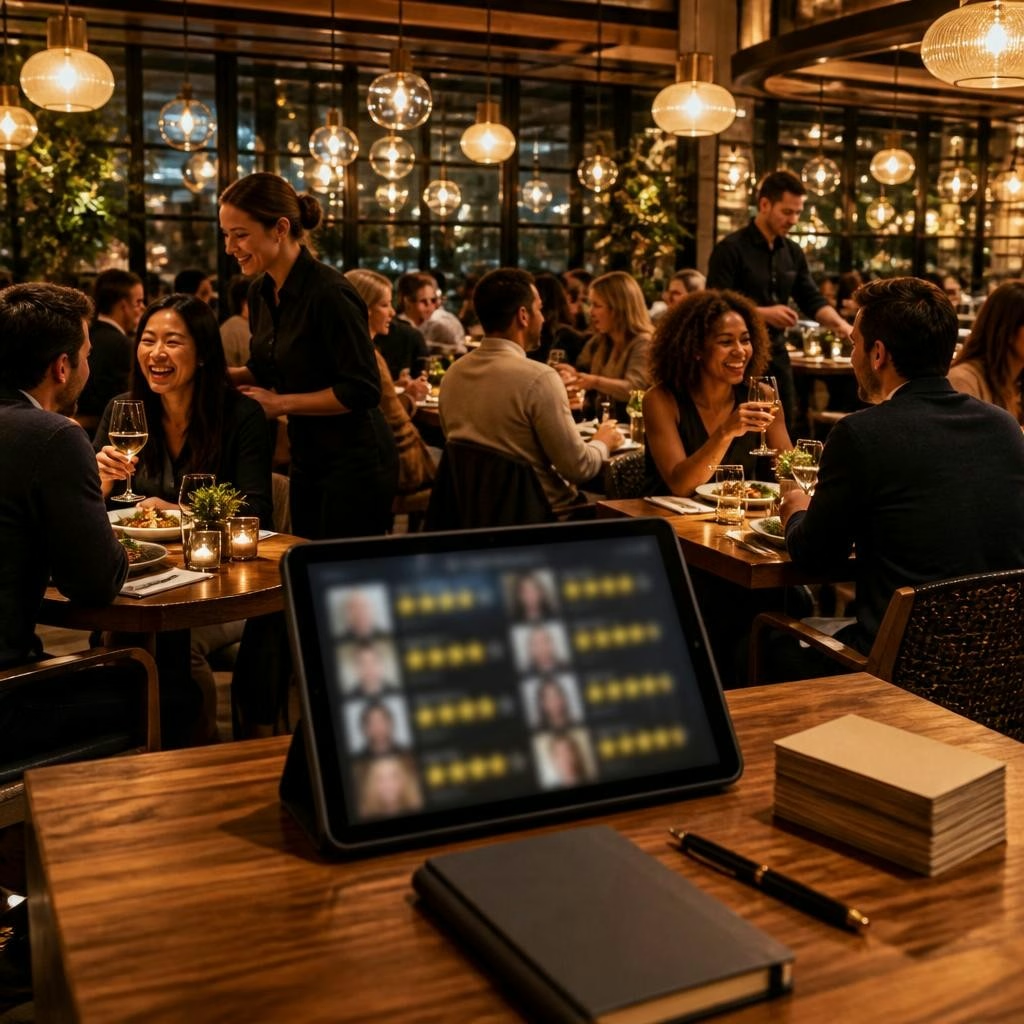
Dining rooms are full of signals—smiles, repeat visits, enthusiastic comments to servers—that don't always make it onto Google or social pages. When those guest experiences stay in the room, search engines and potential guests don't see the proof. This article gives a low‑pressure system to surface authentic praise without adding extra stress to your crew, and explains practical ways to turn those words into review replies, social posts, and business profile improvements.
Keep it low pressure: the mindset that makes guests say yes
A simple principle works best: ask only when the guest looks genuinely pleased, and make it easy to say no. Train staff to watch for natural signals—regulars who linger, diners who compliment a dish, or parties that tip with enthusiasm—and to use one short, friendly line rather than a sales pitch. The goal is honest feedback, not volume at any cost.
Spotting your happiest regulars—practical signals to notice
Create lightweight ways for staff to flag likely reviewers: a tick on the reservation, a note on the POS, or a quick mention in the server checklist. Look for repeat visits, enthusiastic descriptions of menu items, photos taken at the table, or guests who ask questions about ingredients or sourcing—those are people who already care and are more likely to leave thoughtful feedback.
Three low‑pressure asks your team can use
Keep requests short and situational. Try variants like: a friendly tableline at the end of service, a short note on the check presenter, or a brief follow‑up text or email after a reservation if the guest opted in. Example: “We’re so glad you enjoyed tonight—if you have a minute, a quick review helps other guests find us.” If you offer a follow‑up message, keep it to one link and a thank‑you, and only send when the experience was clearly positive.
Make it simple: digital flows that actually work
Reduce friction by sending one clear link (QR code at the table, short URL on receipts, or a single button in a confirmation text) that goes directly to the review destination you prefer. Keep the path short: the fewer taps the better. Also check that links open correctly on mobile before rolling them out—few things are more discouraging than a broken link when someone’s ready to leave a review.
How to respond to reviews in a way that builds trust
When you get a review, reply promptly with a short, personalized thank‑you that reflects something specific the guest mentioned. Use natural language—thank them for the dish or the service they highlighted—and avoid templated, robotic responses. For mixed or critical reviews, acknowledge the issue, invite a private follow‑up, and describe any next steps you’ll take to improve. Repurposing reviewers’ own words (accurately and respectfully) can make replies sound more authentic.
Handling negative feedback—public empathy, private resolution
Not every day will be perfect. When a guest posts a negative review, respond publicly with empathy and a clear intention to make things right: apologize, thank them for the feedback, and offer a private channel to continue the conversation. Then follow up privately to learn what happened and, if appropriate, invite the guest back to experience the improvement. This approach helps future diners see you care and gives you real input to improve operations.
Turning reviews into content and proof
Customer words are useful beyond the reviews page. Excerpts (used with care and without quoting private details) can become social posts, menu highlights, FAQ answers, and local content that helps search engines understand what makes your restaurant special. We help restaurants turn guest language into review replies, social posts, and short articles that reflect real experiences and build credibility across profiles.
Measure progress without overcomplicating things
Focus on a few simple signals: are you getting more descriptive, on‑brand feedback? Do replies feel more personalized? Is it easier to spot common praise or recurring issues from guest language? Tools that track themes and show what proof is missing online can help you prioritize improvements rather than chasing vanity metrics.
If you want help, here’s how RepUpgrade supports the playbook
RepUpgrade was built to help restaurants translate in‑room praise into clearer online reputation signals. Our Local Trust Engine and optimization services focus on understanding what guests are saying, identifying missing proof, and turning real customer words into review replies, social posts, and profile improvements. If you’d like help implementing a low‑pressure review system, training staff, or turning reviews into useful marketing content, we can walk you through next steps and practical templates—no hype, just useful tools to make guest praise visible.
Article by
RepUpgrade
RepUpgrade helps independent restaurants turn customer praise into stronger Google visibility, better review responses, and more useful marketing content. Our Local Trust Engine helps owners understand what guests are saying, what proof is missing online, and what to improve first. We turn real customer words into review replies, social posts, articles, and reputation signals that help Google, search engines, and AI answer engines recommend the restaurant with more confidence. Built for restaurants that already do great work but need their online reputation to reflect the food, service, and hospitality guests experience in the room.