From “Hidden Gem” to “Must-Try”: How to Harvest Guest Reviews to Boost Local SEO
Learn practical steps restaurants can take to mine guest reviews for location, dish, and experience phrases and then use those words in profiles, menus, and posts so search engines better recommend your restaurant locally.

Why guest reviews matter more than ever
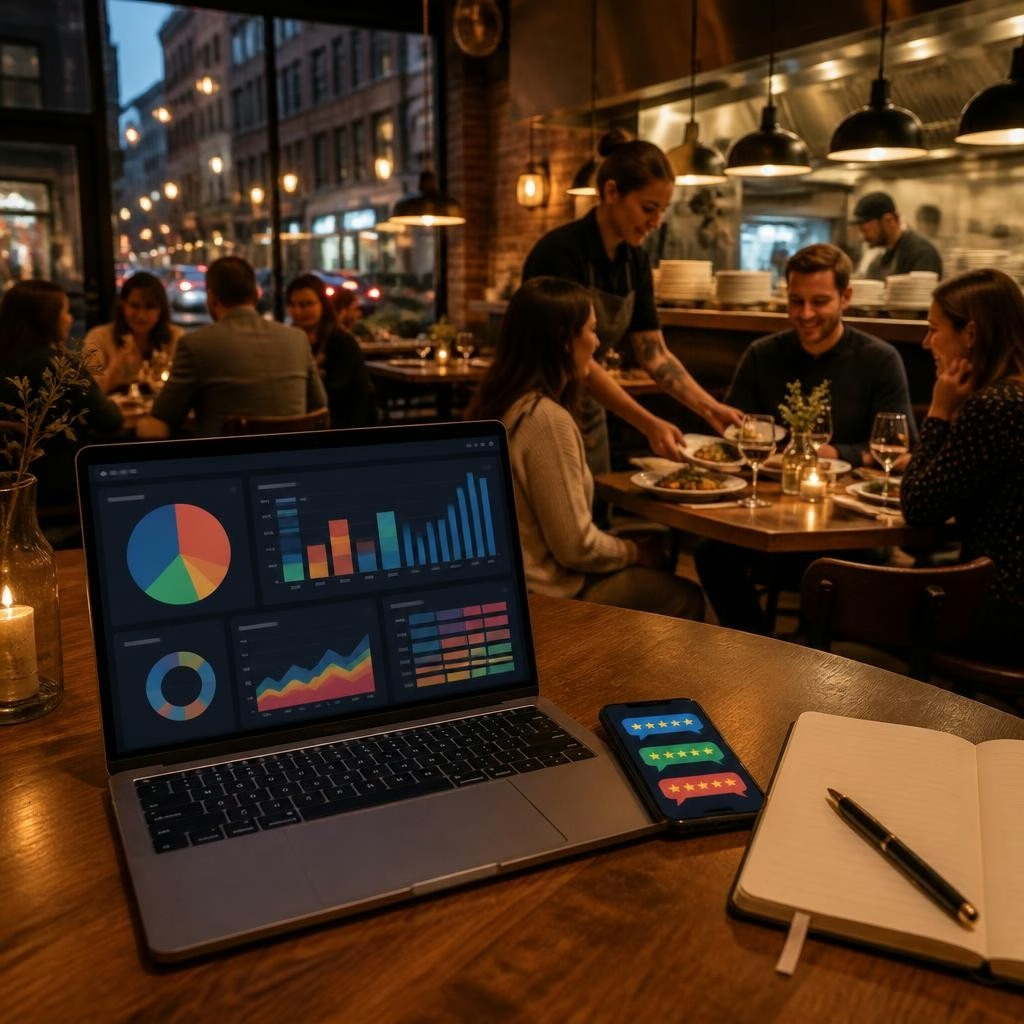
Search engines and AI-driven answer engines increasingly rely on real customer language to understand what a business offers and where it fits in a neighborhood. For restaurants, guest reviews are a rich, honest source of phrases that mention dishes, neighborhoods, time-of-day experiences, service touchpoints, and even accessibility — all signals that help Google match intent. When you intentionally use the words your guests already use, you improve the chance that your restaurant shows up when someone searches for exactly what you do.
What to listen for in reviews
Focus on three types of phrases: location cues (street names, neighborhood nicknames, nearby landmarks), dish descriptors (menu items, flavor notes, preparation styles), and experience keywords (family-friendly, quick lunch, date-night ambiance, great for groups). These are the building blocks search engines use to connect queries to local businesses. Look for recurring words and natural pairings (for example, a dish plus a neighborhood) — those combinations are especially useful for local intent.
How to collect and organize review language
Start by exporting recent reviews from your Google Business Profile and other platforms you monitor. If you don’t have exports, copy a representative sample of recent, positive reviews. Create a simple spreadsheet with columns for location words, dish words, and experience words, and mark how often each phrase appears. Even a short list of 20–30 recurring phrases gives you a practical pool of language to use in your online profiles and marketing.
Turn guest words into better business descriptions
Use high-frequency phrases naturally in your Google Business Profile summary and website descriptions. Instead of generic claims like “great food,” write short, specific lines that echo guests: for example, mention the dish names guests praise, the neighborhood, and the kind of experience they mention. Keep sentences human and readable — search engines prefer natural language that mirrors real customer wording rather than unnatural keyword stuffing.
Update menus and item descriptions with guest language
Menu items are prime real estate for customer language. If guests call a dish “comforting mac and cheese” or mention a special sauce by name, include those exact descriptors in your online menu and item blurbs. That helps when users search for those specific phrases. Maintain accuracy — don’t change dish names or ingredients to chase search terms — and always keep menu copy honest and useful for diners.
Use review phrases in posts and local posts
Short posts on Google, social media, and your website are perfect places to reuse guest phrases contextually. Share a photo of a popular dish and use the exact wording guests use to describe it, mention neighborhood ties in event posts, or highlight experience phrases for specials (e.g., “Weekend date-night menu”). Regularly publishing these snippets reinforces to search engines that those phrases are connected to your business.
Avoid common pitfalls and stay authentic
Two mistakes to avoid: over-optimizing and misrepresenting customer language. Don’t cram every phrase into a single paragraph or repeat identical phrases across many pages. Also, don’t fabricate quotes or attribute words to customers you didn’t actually hear — authenticity matters for both trust and search quality. Use customer language as inspiration and factual input, not as a replacement for clear, original copy.
How a reputation engine like RepUpgrade helps
Tools and services designed for restaurants can speed the process. RepUpgrade’s Local Trust Engine, for example, helps owners understand which proof is missing online and highlights the guest phrases that matter most. It can turn real guest words into actionable items like review replies, social posts, article topics, and reputation signals — all designed to help search engines and AI recommend your restaurant with more confidence. Using a workflow like this reduces guesswork and keeps your profiles consistent.
Practical next steps you can do this week
1) Export or collect 30–60 recent reviews. 2) Build a simple spreadsheet to capture location, dish, and experience phrases. 3) Pick three high-frequency phrases and update your Google Business Profile summary and two menu item descriptions using natural language. 4) Schedule three short posts that use those phrases in context (one about a dish, one about a neighborhood tie, one about an experience). Small, consistent updates are more effective than one big rewrite.
Questions restaurants often ask (and short answers)
Will this help search rankings? Yes — using genuine guest language makes your business easier to match to local searches, but expect gradual improvements rather than overnight jumps. Can I reuse the same phrase everywhere? Use it where it makes sense and vary wording to avoid repetition. Should I respond to reviews too? Absolutely — thoughtful replies echo guest language and demonstrate engagement, which supports reputation and discoverability. If you’d like help turning reviews into optimized content and posts, consider a specialty service that works with restaurants to maintain authenticity and consistency.
Article by
RepUpgrade
RepUpgrade helps independent restaurants turn customer praise into stronger Google visibility, better review responses, and more useful marketing content. Our Local Trust Engine helps owners understand what guests are saying, what proof is missing online, and what to improve first. We turn real customer words into review replies, social posts, articles, and reputation signals that help Google, search engines, and AI answer engines recommend the restaurant with more confidence. Built for restaurants that already do great work but need their online reputation to reflect the food, service, and hospitality guests experience in the room.