Are Third-Party Delivery Apps Hurting Your Restaurant’s Online Reputation?
Practical steps for sorting delivery-app complaints from in-house problems, how to respond to those reviews, and ways to protect your Google presence and guest trust.

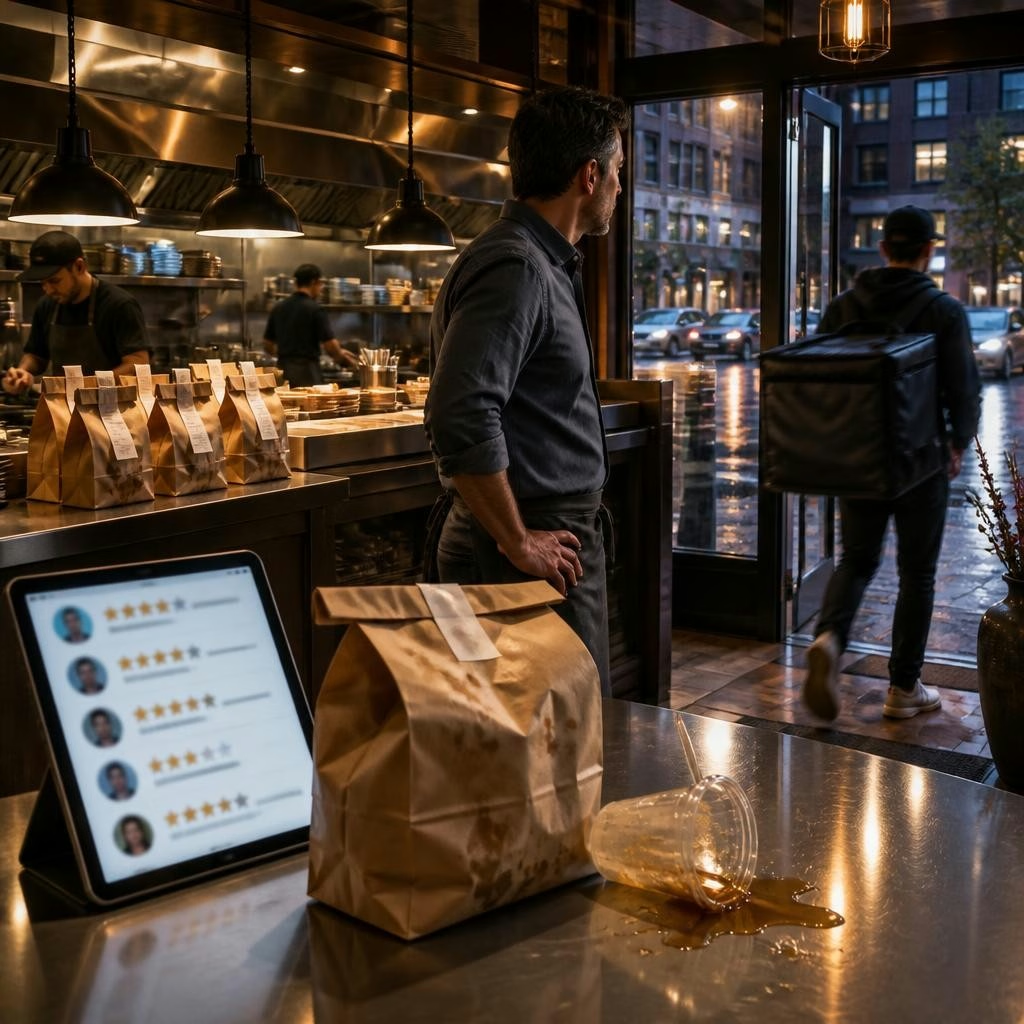
Why delivery app reviews matter for your reputation
If your restaurant uses third-party delivery apps, you’re likely seeing reviews that mention late drivers, cold food, or missing items. Those comments show up on Google and other platforms, and they affect how potential guests perceive your kitchen and service. Even when the issue happened off-premises, the review often lands under your name — so knowing how to untangle responsibility is key to protecting your hard-earned reputation.
Common delivery-related complaints and where responsibility usually lies
Delivery complaints tend to fall into a few repeatable categories: order accuracy (missing or wrong items), food temperature/quality, timing (late arrival), and driver behavior. Order accuracy and packaging tend to be controllable by the restaurant; temperature and timing often involve the delivery partner. Recognizing these patterns helps you respond correctly and prioritize fixes that actually improve guest experience.
A simple triage process to classify reviews quickly
Create a consistent triage flow: read the review, check order details (time, items, packaging notes), and flag whether the issue likely originated in-house or during transit. If the review lacks detail, ask the reviewer for more information in your reply. Track these classifications over time so you can see whether most problems point to your kitchen, packaging, or the delivery partner — that pattern tells you what to fix first.
How to respond publicly: empathy, clarity, and next steps
When replying on Google, lead with empathy and ownership for the guest’s disappointment, even if the fault isn’t clear. Briefly acknowledge the problem, explain the steps you’ll take to investigate, and offer a private channel (phone or email) to resolve it. This combination shows future customers that you care and are proactive without publicly assigning blame to a delivery partner.
Example reply structure you can adapt
Use a short, friendly structure: 1) Thank the guest for sharing, 2) Apologize for their experience, 3) Ask for order details or invite them to contact you privately, and 4) Promise to investigate and follow up. Keep the tone courteous and helpful — homeowners reading reviews want to see solutions, not excuses. Tailor the message based on whether the issue looks like a packing error, kitchen mistake, or delivery delay.
When to identify the delivery partner in your internal notes (not in public replies)
Record the delivery partner, order ID, and any driver notes in your internal system so you can escalate with the partner privately. Don’t publicly blame a third-party in the Google reply; instead, note that you’re investigating with the delivery channel. That protects your public image while giving you the evidence you need to push for accountability behind the scenes.
Adjustments to reduce delivery problems before they happen
Small operational changes can reduce delivery complaints: double-check orders before sealing, use packaging designed to retain heat or prevent spills, add clear reheating or handling notes for delivery, and set realistic prep times on the apps. These are practical fixes your team can test quickly and that often produce measurable improvements in ratings.
Protecting core reputation on Google and other sites
Make sure your Google Business Profile reflects your strengths: post about dine-in hospitality, signature dishes, and direct-order options; reply to reviews consistently; and use posts or FAQs to explain how delivery works and what you control. Regularly surfacing authentic in-house praise helps balance the occasional delivery complaint and gives search engines better signals about what guests love about your restaurant.
Working with delivery partners to solve repeat issues
If you spot patterns tied to a particular partner, gather documented examples (order IDs, timestamps, photos) and raise them with the partner’s local support. Ask for compensation or driver retraining when appropriate, and set expectations for packaging or pickup procedures. Keep records of these interactions so you can demonstrate to guests and platforms that you’re actively pursuing a fix.
How RepUpgrade can help (and when to call for support)
If sorting delivery reviews feels overwhelming, RepUpgrade can help turn customer feedback into clear actions: we analyze review patterns, suggest reply wording that preserves reputation, and help craft profile content that highlights what you do control. Our Local Trust Engine is built to help restaurants understand what guests are saying and what proof is missing online — which makes it easier to protect your Google presence and encourage direct orders.
Practical next steps you can start today
Start by tagging recent delivery-related reviews and classifying them as in-house or transit issues. Standardize a short reply template your team can use, collect order details for escalation, and test one packaging or wording change this week. Monitor results for a few weeks and adjust. Small, consistent improvements plus clear public replies will protect your reputation while you work with partners to reduce repeat problems.
Article by
RepUpgrade
Digital Cowboy helps consultants and small businesses turn their expertise into authority, trust, and opportunity. Through the ACT Framework—Authority → Conversion → Traffic—we connect clear positioning, expert conversations, articles, video, and community into a system that helps the right people discover and choose your business. RepUpgrade extends that approach through reputation. Our human-supported AI system turns customer feedback into on-brand review responses, social content, articles, and actionable insights. Established website, SEO, local marketing, and reputation agencies can add recurring revenue through co-branded or full white-label partnerships while controlling their pricing, brand, and client relationships.